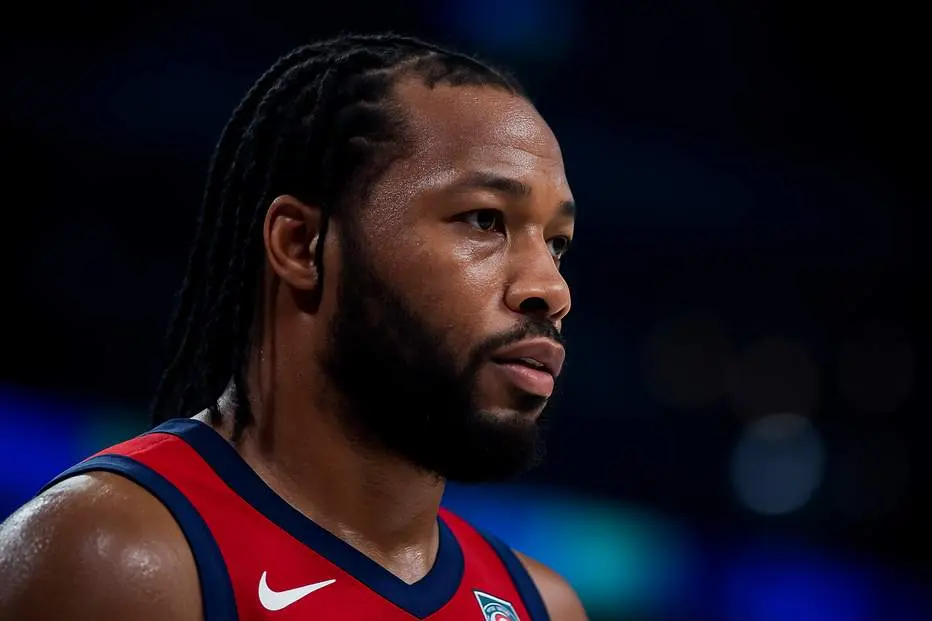
When the Noise Stops — Jordan Nwora: Nobody Asks Why I Still Love Basketball

Life Between Cities and Finding a Home
Jordan Nwora, now 27 and playing for Crvena Zvezda, has spent his life moving between places. Born in Buffalo to a Nigerian father and an American mother, he’s lived in cities from Milwaukee and Indianapolis to Toronto, Istanbul and Belgrade. Those moves shaped how he sees belonging: it often comes down to small routines, like walking his dog until everything quiets down.
Growing up, Nigeria was never just a footnote for him. With a father deeply involved in the sport there and frequent trips back, his connection to Nigerian culture felt active and intentional — something he embraced rather than inherited.
Moving on short notice became normal for him. Phone calls would decide where he lived next, and that kind of life makes it hard to pin down a single place as home. What helped was forming real relationships wherever he landed. People and connections are what stick with him, no matter the city.
Quiet, Community Work, and the Costs of the Job
When minutes on the court dried up in Istanbul, Jordan kept things low-key: walks with his dog, music, video games and naps. In Belgrade — a loud, full city — he still finds the same remedy. Nature and simple, solitary walks give him space to breathe.
Off the court he runs a foundation focused on kids across West Africa and has organized camps in places like Nigeria, Ghana and Côte d’Ivoire. Those trips left a mark: the kids’ enthusiasm and resilience showed him how much a single opportunity can mean. Their joy and energy made him rethink gratitude and purpose.
Summers are straightforward: he goes home, takes about a week to recover, then gets back to training with his team and personal coaches to prepare for the next season. Beyond basketball, he’s building the foundation and tending to family life — priorities that matter to him at this stage.
If people asked the questions he wishes they would, they’d dig into the toughest obstacle that shaped him or ask plainly why he still loves the game. He points out a truth that rarely gets said out loud: success often requires sacrifice. Athletes miss weddings, birthdays and holidays, and many tie their worth to how they play. When things go well, life feels great; when they don’t, it can be hard not to let performance reshape your identity.
The next conversation in the “When the Noise Stops” series profiles a coach who finds calm tracking weather and working in his garden. The series, conducted by Milos Srdjanov, aims to explore the personal sides of basketball people — everything but the game itself.